
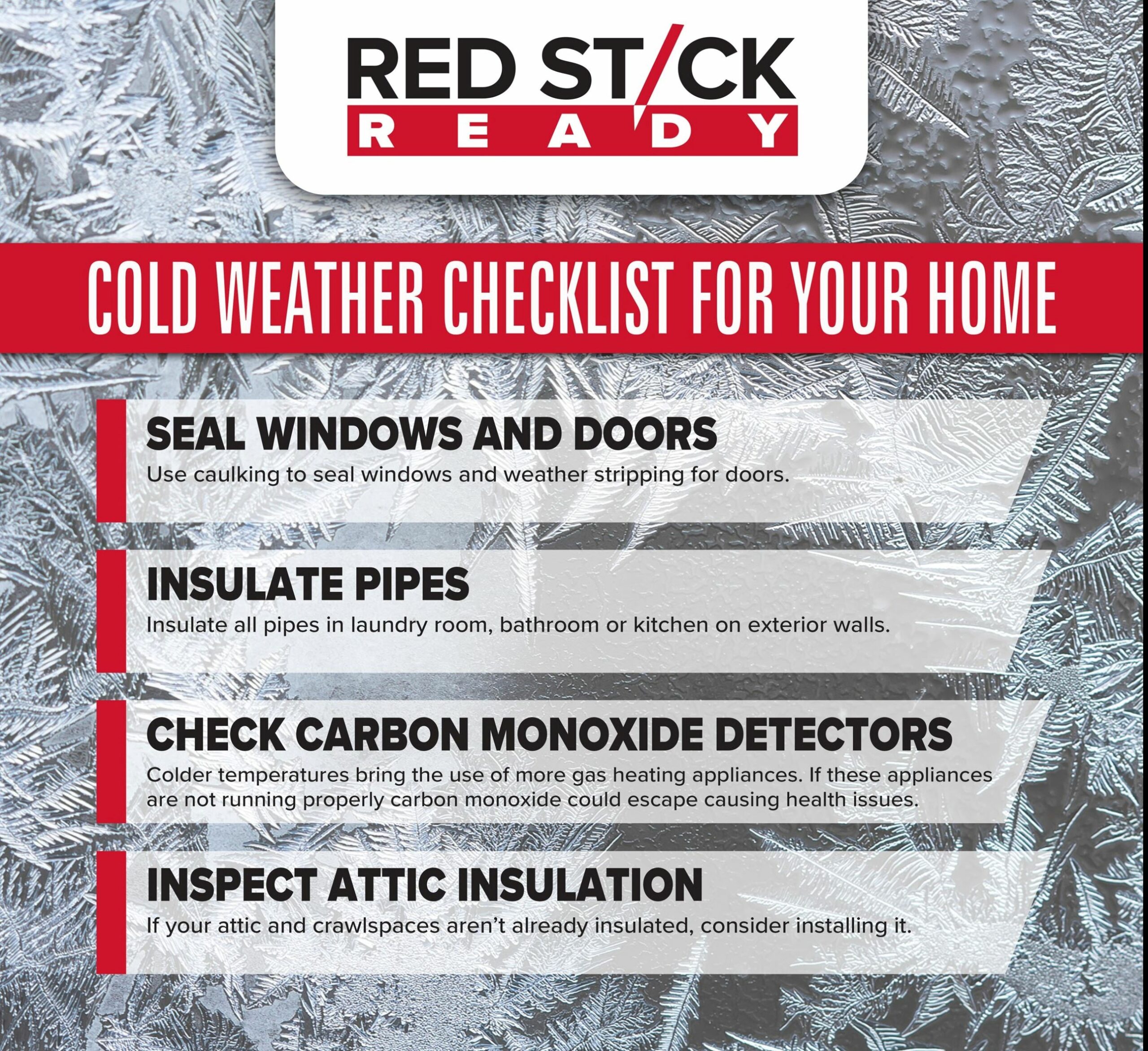
While South Louisiana is not known for having severe winter weather. The winter months can bring low temperatures, strong winds, icing, sleeting, freezing rain, and the occasional snow.
Turn off and drain the water from outdoor water spigots. Disconnect and drain garden hoses and store them in a garage or shed. Learn how to shut off water valves for potential pipe bursts.
Seal gaps around windows and doors with weather stripping or caulk to keep the cold air out.
Bring pets and plants inside.
Inventory your Disaster Supply Kit. Check expiration dates, replenish essential medications, charge devices, add blankets and cold-weather clothing, and have the right tools necessary to disconnect utilities if needed.
Review your communication plan. Communicate with your family and neighbors about their winter preparedness actions.
Test all smoke and carbon monoxide detectors.
Service vehicle radiators and maintain antifreeze level; ensure tires are in good condition and have the correct air pressure. Store an emergency kit in your car including blankets, food and water, first aid, and other road safety items.
Stay updated on the latest weather forecast. Monitor local weather radio and television stations for information from local officials.
Turn off and drain the water from outdoor water spigots. Disconnect and drain garden hoses and store them in a garage or shed. Learn how to shut off water valves for potential pipe bursts.
Bring pets and plants inside.
Inventory your Disaster Supply Kit. Check expiration dates, replenish essential medications, charge devices, add blankets and cold-weather clothing, and have the right tools necessary to disconnect utilities if needed.
Review your communication plan. Communicate with your family and neighbors about their winter preparedness actions.
Service vehicle radiators and maintain antifreeze level; ensure tires are in good condition and have the correct air pressure. Store an emergency kit in your car including blankets, food and water, first aid, and other road safety items.
Stay updated on the latest weather forecast. Monitor local weather radio and television stations for information from local officials.
Adjust your schedule to avoid being outside during the coldest temperatures, if possible.
Practice fire safety. Keep heating sources at least 3' away from any flammable materials. Always plug space heaters directly into an outlet, and make sure its cord isn’t damaged or frayed. Never use an oven or stove as a home heating source.
Wear several layers of loose clothing. Wear a hat and make sure to protect the ears, face, hands and feet.
Carry extra cold weather gear, such as extra socks, gloves, hats, jacket, blankets, a change of clothes and a thermos of hot liquid.
Stay updated on the latest weather forecast. Monitor local weather radio and television stations for information from local officials.
Stay indoors as much as possible. Consider postponing non-essential travel to avoid slippery sidewalks and roadways. If travel is necessary, check local weather and traffic reports before heading out.
Winter storms may bring power outages. Follow manufacturer’s instructions carefully when operating a generator, and only use it outdoors and away from windows. Disconnect appliances and electronics to avoid damage from electrical surges. Have alternate plans for refrigerating medicines or using power-dependent medical devices.
During a power outage, keep window coverings like blinds or curtains open during the day to take advantage of the sun’s heat. Close them at night to keep heat from escaping. Seal gaps around the windows with weather stripping or caulk to keep the cold air out.
Practice fire safety. Keep heating sources at least 3' away from any flammable materials. Always plug space heaters directly into an outlet, and make sure its cord isn’t damaged or frayed. Never use an oven or stove as a home heating source.
Stay updated on the latest weather forecast. Monitor local weather radio and television stations for information from local officials.